CIM Conference Programme

Sounding Posthuman: Reflecting on 50 Years of CIM and a New Perspective on Teresa Rampazzi

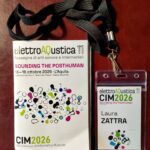
What an inspiring week in L’Aquila!

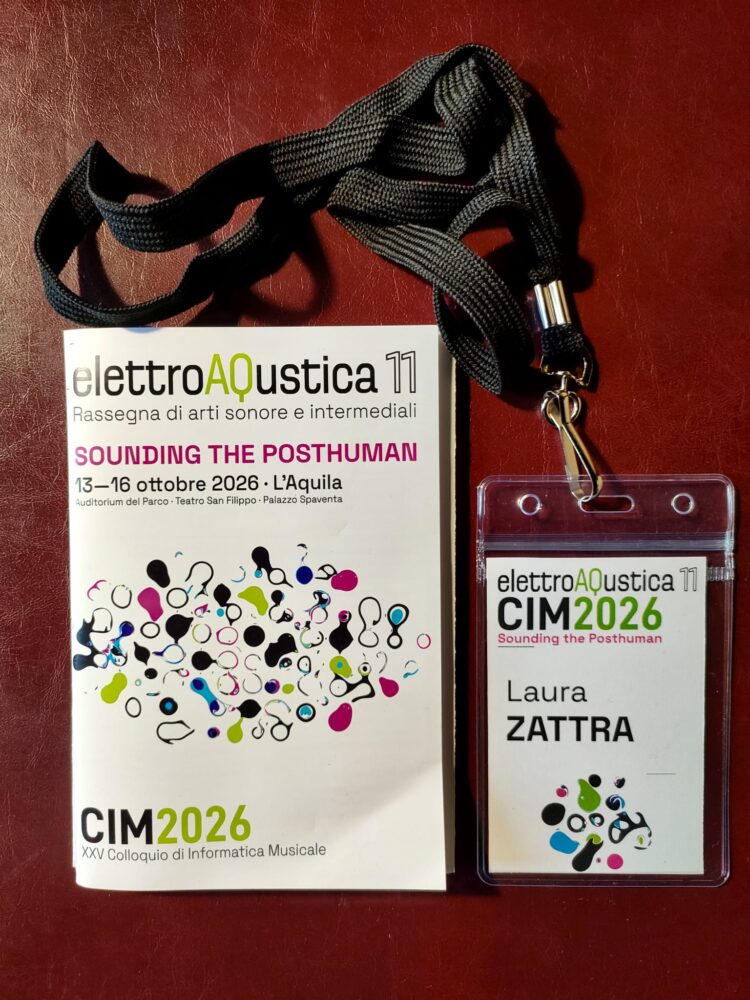
I am so happy to have been part of CIM (Colloquio di Informatica Musicale), which 10 days ago (October 13–16, 2026) celebrated a major milestone: its 50th anniversary! This year’s inspiring theme, Sounding Posthuman, provided the perfect framework to introduce a new direction in my long-standing research on Teresa Rampazzi.

It was an honor to present my paper, “Writing Teresa Rampazzi. Between Historiography (1998–2026) and Post-Human Rereading”, as well as to chair a session and moderate the roundtable for our MEDEG (Musica Elettronica Donne e Genere) group.

Beyond the Bourgeois Instrument: The Posthuman Pioneer

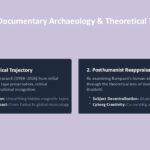
My presentation brought together nearly three decades of archival research, source criticism, and oral history (from 1998 to 2026) to re-evaluate Rampazzi’s artistic trajectory through the lens of posthumanist theory (drawing on Rosi Braidotti and Donna Haraway).

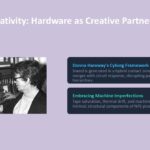
When Rampazzi abandoned the piano at age fifty—the quintessential anthropocentric device of Western bourgeois humanism—she turned to analog generators, magnetic tape, and eventually computer systems like the Interactive Computer Music System (ICMS). By doing so, she dismantled the myth of the solitary romantic genius. Instead, she embraced a collective, distributed, and cyborg creativity within the Nuove Proposte Sonore (NPS) group and her collaborations with scientists and engineers at the University of Padua’s Centro di Sonologia Computazionale (CSC). Long before posthumanism was formally theorized in philosophy, Rampazzi’s practice anticipated the decentralization of the human subject, treating technology not as a mere tool, but as a cognitive prosthesis and a co-creative partner.

Thank You & Open Access

Thank you to everyone who made this anniversary edition possible and to such a vibrant, passionate community of researchers, artists, and musicians.

All conference papers (including mine) are available for free download on the official program page:

CIM 2026 Program & Papers

Direct link to my paper: Scrivere Teresa Rampazzi. Tra Storiografia (1998-2026) e Rilettura Post-Umana
The NPS Group (first phase: 1965-1968). Teresa Rampazzi wears sunglasses.

Teresa Rampazzi in the last issue of Positionen n. 114 “Heroines of Sound”

I just uploaded the full text of my new article on this site!

Laura Zattra (2018), “Sie war ihrer Zeit voraus. Teresa Rampazzi, eine wichtige Komponistin elektronischer Musik in Italien”, Positionen. Texte zur Aktuellen Musik, n. 114 “Heroines of Sound”, pp. 9-11, ISSN: 0941-4711.

Enjoy the reading.

DOWNLOAD HERE

The NPS Group (first phase: 1965-1968). Teresa Rampazzi wears sunglasses.
Positionen-Logo

Positionen n. 114. New article by L. Zattra

Positionen-Logo

Out Now! The first article in the German language devoted to Teresa Rampazzi is presented in the latest issue of Positionen. Texte zur Aktuellen Musik, n. 114 “Heroines of Sound” (2018).

The article by Laura Zattra is entitled “Sie war ihrer Zeit voraus. Teresa Rampazzi, eine wichtige Komponistin elektronischer Musik in Italien”.

www.positionen.net/

Other articles:

Bettina Wackernagel, Never Stop Questioning • Ingo Techmeier, Heroines of Sound – das Festival • Laura Zattra, Sie war ihrer Zeit voraus. Teresa Rampazzi, eine wichtige Komponistin elektronischer Musik in Italien • Helen Heß, Alltagssinfonien und Sternenmusik. Else Marie Pade – dänische Grand Dame der elektronischen Musik • Monika Pasiecznik, Fehlende Herstory. Die Komponistinnen der neuen und elektronischen Musik in Polen • Julia Mihály, Vokalperformance. Eine One-Woman-Show • Bettina Wackernagel/Helen Heß, Heroines of Sound • Julia Eckhardt, Art has no gender but artists do • Beatrix Borchard/Elisabeth Treydte, Genderforschung in der Musikwissenschaft. Eine (kritische) Bestandsaufnahme aus zwei Perspektiven • Ricarda Ott, MUGI: Musikgeschichtsschreibung mit neuem Blick • Katja Heldt, Feministische Aufbrüche in der zeitgenössischen Musik • Gisela Nauck, Gender Research in Darmstadt. Ein Interview mit dem künstlerischen Leiter der Darmstädter Ferienkurse Thomas Schäfer • Claudia Tittel, Magnetic Attacks. Christina Kubischs Arbeiten mit elektromagnetischer Induktion • Cathy van Eck/Gabrielle Weber, Nachdenken über Klang … • Elena Ungeheuer, Toward a »Space-As-Shared-Sonic-Practices Turn«. Gedanken nach der Dubliner Konferenz Sounding Out the Space • Jürgen Krebber, Archiv des IMD online